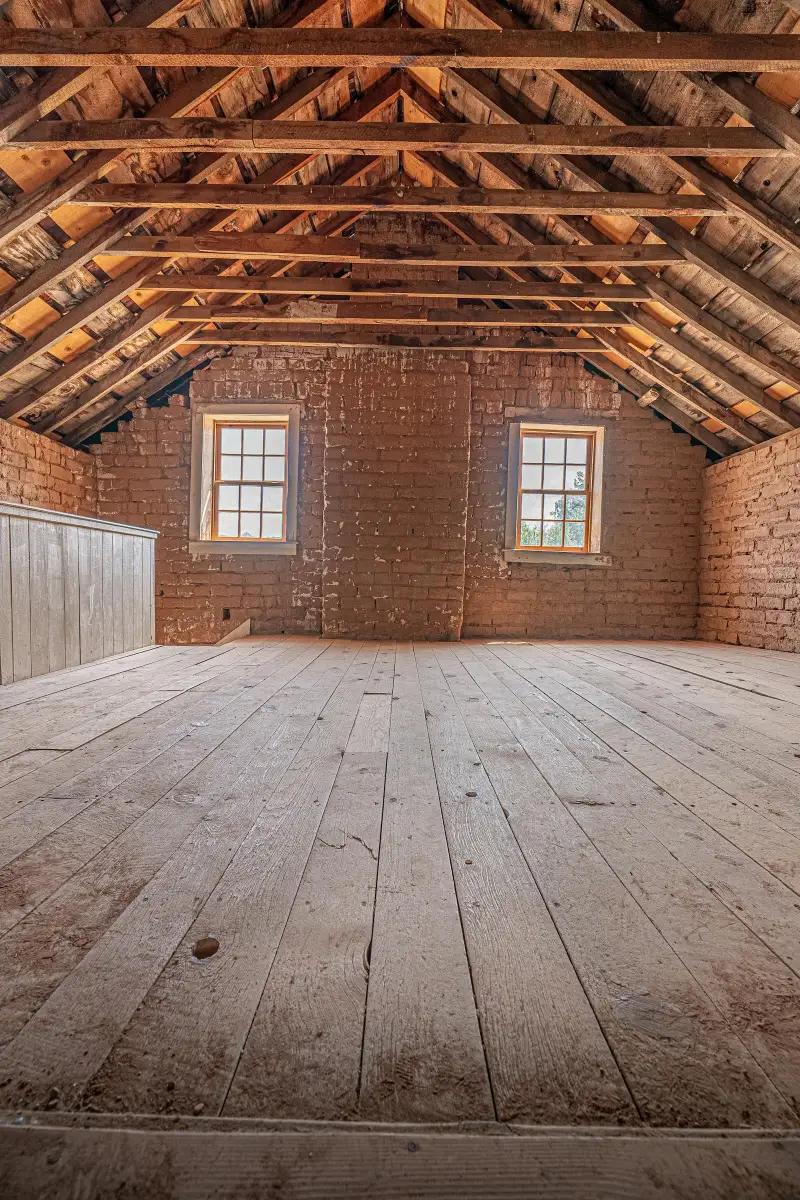
Attic floor
Broad floor coverage keeps a vented attic outside the conditioned envelope when the assembly supports it.
Seal It evaluates Winston-Salem attics before recommending a material, because the right depth depends on where the thermal boundary sits and what the existing insulation is hiding.

Winston-Salem sits in climate zone 4A, where the US Department of Energy range for attic insulation is roughly R-38 to R-60. That depth only performs if air is not moving through the attic floor, so the assessment reviews sealing, ductwork, access and existing material together.
Seal It insulates attics throughout Winston-Salem. The scope depends on the property and the condition of the attic.
The assessment covers existing material, air leakage and access before a material or depth is recommended, so the written estimate explains the thermal boundary and the preparation it depends on.
See what belongs in the evaluation → 01 / Condition review
Broad floor coverage keeps a vented attic outside the conditioned envelope when the assembly supports it.
A roofline system brings the attic inside the envelope and needs coordinated ventilation and assembly planning.
Penetrations and bypasses move heat and moisture even where installed depth looks correct.
Wet, compressed or contaminated insulation changes preparation and may need removal first.
The estimate should connect the customer’s goal to visible site conditions, included work and the practical requirements of installation.
Winston-Salem sits in climate zone 4A, where the US Department of Energy range for attic insulation is roughly R-38 to R-60. Depth alone does not deliver that performance if air is moving through the attic floor, so the assessment covers both.
Insulating the attic floor keeps a vented attic outside the conditioned space. Insulating along the roof deck brings the attic inside it. Ventilation, ductwork and roof condition decide which one the building supports.
Wet, compressed, rodent-affected or contaminated material changes the preparation. Adding new insulation on top of it hides the problem and wastes the coverage. Removal, when needed, is written into the scope before installation.


Review existing depth, staining, penetrations, duct runs and visible roofline conditions.
Define whether the thermal boundary belongs at the attic floor or the roof deck.
Write any air sealing, removal, access or repair dependency into the scope.
Apply the selected system with consistent coverage at transitions and irregular framing.
Preparation, fitting, installed coverage and continuity at edges matter alongside the selected insulation. The work should be judged against the surfaces and preparation written into the estimate.
Conditions that belong to a roofer, plumber, electrician, drainage contractor or another trade should be identified before insulation hides the work area.
See Seal It’s approach →
These application and condition images illustrate the physical details an estimator needs to connect to the property. The final recommendation is based on the site.


Share the property location, work area and the condition that prompted the project. The estimator can then review the assembly and identify preparation, access and material decisions that belong in the quote.
These answers cover common planning questions. The property review and written estimate determine the final scope.
Yes. Winston-Salem and the surrounding Forsyth County area are served for residential attic work, including air sealing, attic-floor and roof-deck insulation, and removal of damaged material. Call 336-490-9521 or request an estimate.
Winston-Salem falls in climate zone 4A, where the US Department of Energy range for attics is about R-38 to R-60. The exact target depends on the existing assembly, which is why the depth is confirmed on site rather than quoted blind.
Not always. Dry, evenly distributed material can often stay in place and be topped up. Wet, compressed, contaminated or rodent-affected insulation is removed first, because new material laid over it hides the underlying problem.
Any air sealing included in a project is written into the scope with the insulation work. Sealing penetrations before new material covers the attic floor is far easier than returning to it afterwards.
Yes. Seal It provides free estimates in Winston-Salem. The first conversation confirms the property address, the building type and the work being requested before a visit is scheduled.
Point out the work area, current insulation, visible staining or moisture, comfort concerns, access limits and any repairs already planned. Photos and plans can help when they are available.
The written estimate should identify included surfaces, preparation, material approach, access and conditions outside the insulation scope. Ask about any item that is unclear before scheduling the work.

Tell Seal It what you are insulating and what prompted the project. The team will follow up about the building, location and next step.